Showing posts with label poster. Show all posts

Sunday, October 31, 2010

Chained for Life featuring famous "Siamese" Hilton Twins | Watch free

Chained for LifeImage via WikipediaFreaksImages via Wikipedia
Chained for Life is a 1951 exploitation film featuring the famous conjoined ("Siamese") Hilton Twins, Daisy and Violet. It features several vaudeville acts, including juggler Whitey Roberts, a man doing bicycle stunts, and a man who plays The William Tell Overture at breakneck speed on an accordion. The movie incorporates aspects of the twins' real life, including their singing act, a futile attempt by one sister to obtain a marriage license, and a publicity-stunt marriage.
The twins' voices are featured in three duets, including "Every Hour of Every Day" and "Love Thief". The movie was directed by Harry L. Fraser.

In 1932, the twins appeared as themselves in the movie Freaks.

Watch William Castle's House on Haunted Hill Free Online

House on Haunted HillImage via Wikipedia
House on Haunted Hill is a 1959 American B movie horror film from Allied Artists. It was directed by William Castle, written by Robb White, and starring Vincent Price. It  is the tale of five people invited to stay the night in a haunted house by an eccentric millionaire, Fredrick Loren (Vincent Price), who is throwing the "party" for his fourth wife, Annabelle (Carol Ohmart), with the stipulation that the power will be out and all doors will be locked at midnight, allowing no accessible escape. Anyone who stays in the house for the entire night, given that they are still alive, will each receive $10,000. 

The film has since become public domain, available on House On Haunted Hill available for free download at the Internet Archive or watch online compliments of TCManiacs right here:

Monday, October 25, 2010

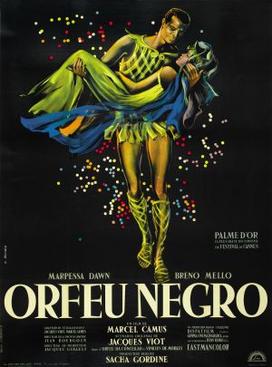
Black Orpheus

Black OrpheusImage via Wikipedia
Black Orpheus (Portuguese: Orfeu Negro) is a 1959 film made in Brazil by French director Marcel Camus. It is based on the play Orfeu da Conceição by Vinicius de Moraes, which is an adaptation of the Greek legend of Orpheus and Eurydice, setting it in the modern context of a favela in Rio de Janeiro during the Carnaval. The film was an international co-production between production companies in Brazil, France and Italy.
The film is particularly renowned for its soundtrack by Brazilian composer Antônio Carlos Jobim, featuring songs such as "Manhã de Carnaval" (written by Luiz Bonfá) and "A felicidade" that were to become bossa nova classics.
Black Orpheus won the Palme d'Or at the 1959 Cannes Film Festival as well as the 1960 Academy Award for Best Foreign Language Film and the 1960 Golden Globe Award for Best Foreign Film (in those awards the film was credited as a French production; only in the 1961 BAFTA Award for Best Foreign Language Film was Brazil credited together with France and Italy).

Friday, January 01, 2010

Bringing in 2010 with 2010! Future is Now!

2001: A Space Odyssey (occasionally referred to as simply 2001) is a 1968 science fiction film directed by Stanley Kubrick and written by Kubrick and Arthur C. Clarke. The film deals with thematic elements of human evolution, technology, artificial intelligence, and extraterrestrial life, and is notable for its scientific realism, pioneering special effects, ambiguous and often surreal imagery, sound in place of traditional narrative techniques, and minimal use of dialogue.

The film has a memorable soundtrack — the result of the association which Kubrick made between the rotary motion of the satellites and the dancers of waltzes, which led him to use the Blue Danube waltz by Johann Strauss II, and the famous symphonic poem Also sprach Zarathustra, by Richard Strauss.

Despite receiving mixed reviews upon release, 2001: A Space Odyssey is today recognized by many critics and audiences as one of the greatest films ever made; the 2002 Sight & Sound poll of critics ranked it among the top ten films of all time. It was nominated for four Academy Awards, and received one for visual effects. In 1991, it was deemed "culturally, historically, or aesthetically significant" by the United States Library of Congress and selected for preservation in The National Film Registry.

Clarke went on to write three sequel novels. The only filmed sequel, 2010, was based on Clarke's 1982 novel and was released in 1984. Kubrick was not involved in the production of this film, which was directed by Peter Hyams in a straightforward style with more dialogue. The film was only a moderate success, disappointing many critics as well as viewers.

On New Yew Day 2010, let's analyze accuracy of predictions

The primary predictions that are central to the plot of 2001: A Space Odyssey, made in 1968, those about space travel and artificial intelligence, did not materialize by that date (and still have not). However, many secondary futuristic elements of the story that are somewhat marginal to the plot have been accurate apprehensions of the future.

Technology

One futuristic device shown in the film already under development when the film was released in 1968 was voice-print identification, although the first prototype was not released until 1977. A credible prototype of a chess-playing computer already existed in 1968, even though it could be defeated by experts. Computers did not defeat champions until the late 1980s. While 10-digit phone numbers for long-distance national dialing originated in 1951, longer phone numbers for international dialing became a reality in 1970. Personal in-flight entertainment displays were first introduced in the 1980s strictly for the purpose of playing video games, but then broadened out for the purpose of TV broadcast and movies in a manner like that shown in the film. The film also shows flat-screen TV monitors, of which the first real-world prototype appeared in 1975. Plane cockpit integrated system displays, known as glass cockpits, were introduced in 1979. Rudimentary voice-controlled computing exists in the early 2000s, although it is still not as sophisticated as depicted in the film.

Some technologies portrayed as common in the film which have not materialized in the 2000s include commonplace space travel, space stations with hotels, moon colonization, suspended animation of humans, common (non-mobile) videophones, and strong artificial intelligence of the kind displayed by HAL.

Corporate and political realities
In terms of corporate realities, many more BBC stations existed in 2001 than did in 1968 as shown in the film, although there is no BBC 12. The corporations IBM, Aeroflot, Howard Johnsons, and Hilton Hotels, all of which appear in the film, have survived till 2001 and beyond. On the other hand, the film depicts a still-existing Pan Am and still-autonomous Bell System telephone company. Pan Am declared bankruptcy in 1991. The Bell System logo seen in the film was modified in 1969 and dropped entirely in 1983. Political realities are also quite different. The Union of Soviet Socialist Republics is alive and well in the film, but was dissolved in 1991.

Several elements have also become anachronistic in the years following the release of sequel 2010, the most obvious being the end of the Cold War and the fact that the Soviet Union ceased to exist in 1991. Pan American World Airways went out of business in 1991. The Astrodome is mentioned in passing as if active; however, the Astrodome closed in 2004. The closing sequence of the film briefly depicts the Lincoln Memorial in Washington, D.C., as seen from a small installation of fountains that was subsequently replaced by the National World War II Memorial.

Saturday, August 15, 2009

Love Affair was An Affair to Remember | 3 Remakes


Love Affair is a 1939 romantic film starring Irene Dunne and Charles Boyer and featuring Maria Ouspenskaya. It was directed by Leo McCarey and written by Delmer Daves and Donald Ogden Stewart, based on a story by McCarey and Mildred Cram.

Love Affair was nominated for the Academy Award for Best Picture, Best Actress, Best Supporting Actress, Best Original Screenplay (Mildred Cram, Leo McCarey), Best Original Song (Buddy G. DeSylva, For the song "Wishing"), and Best Art Direction (Van Nest Polglase, Alfred Herman).

The film is currently in the public domain, and can be found at the Internet Archive.

The film was remade in 1957 as An Affair to Remember with Cary Grant and Deborah Kerr in the lead roles. The film is considered one of the most romantic of all time, according to the American Film Institute. An Affair to Remember was almost identical to Love Affair on a scene to scene basis. McCarey used the same screenplay as the original film, which was penned by Delmer Daves and Donald Ogden Stewart.

A 1994 remake reverting to the original title of Love Affair was written, directed, and starred Warren Beatty, featuring his wife Annette Bening as the female protagonist, and also Katharine Hepburn in a small but pivotal role, which would prove to be her last screen appearance. It was directed by Glenn Gordon Caron and produced by Warren Beatty from a screenplay by Robert Towne and Warren Beatty. The music score was by Ennio Morricone and the cinematography by Conrad L. Hall

Nora Ephron's 1993 film Sleepless in Seattle, starring Tom Hanks and Meg Ryan, was inspired by An Affair to Remember, and clips from the earlier film and its theme song are used throughout.

The climactic meeting at the top of the Empire State Building is a reference to a reunion between Cary Grant and Deborah Kerr in An Affair to Remember that fails to happen because the Kerr character is struck by a car while en route. At one point, some of the characters discuss Affair, with Sam commenting that it sounds like a "chick movie."

Sleepless in Seattle received two nominations for awards in the 66th Academy Awards (held in 1994), but did not win either of them.

Saturday, August 08, 2009

Now Voyager | Don't Let's Ask For The Moon Videoclip

Now, Voyager is a 1942 American drama film directed by Irving Rapper. The screenplay by Casey Robinson is based on the 1941 novel of the same name by Olive Higgins Prouty, who borrowed her title from a line in the Walt Whitman poem "The Untold Want," which reads in its entirety, "The untold want by life and land ne'er granted, / Now voyager sail thou forth to seek and find." Bette Davis' portrayal garnered her an Academy Award nomination, and the film continues to be popular not only due to its star power but also the "emotional crescendos" engendered in the storyline.

For years, Davis and co-star Paul Henreid claimed the scenes in which Jerry puts two cigarettes in his mouth, lights both, then passes one to Charlotte, was developed by them during rehearsals, inspired by a habit Henreid shared with his wife, but drafts of Casey Robinson's script on file at the University of Southern California indicate it was included by the screenwriter in his original script. The scene remained an indelible trademark that Davis later would exploit as 'hers'.

Frank Capra Directs Runyon's Apple Annie Story Twice | Lady for a Day & Pocketful of Miracles

Lady for a Day is a 1933 film which was nominated for the Academy Award for Best Picture. It was written by Robert Riskin, based on the Damon Runyon story Madame la Gimp.The film was directed by Frank Capra. Apple Annie (May Robson) is a street peddler who had sent away her daughter as a young child to be raised in Europe, letting her believe that Annie was a member of New York high society.

The movie was remade (again directed by Frank Capra) as Pocketful of Miracles in 1961, starring Bette Davis and Glenn Ford. The supporting cast including Edward Everett Horton, Peter Falk, who was nominated for the Academy Award for Best Supporting Actor, and Ann-Margret in her film debut. The film proved to be director Frank Capra's final production, and the last film role of veteran actor Thomas Mitchell.


"Lady for a Day" cast


Bette Davis as Apple Annie in "Pocketful of Miracles"

Friday, August 07, 2009

3:10 to Yuma has Successful 2007 Remake


3:10 to Yuma is a 1957 western film starring Glenn Ford and Van Heflin and directed by Delmer Daves. The title song, "The 3:10 to Yuma", was sung by Frankie Laine. The film was based on the short story by Elmore Leonard. The film was well received on release and is still highly regarded today.

When first released in the summer of 1957, the film became popular among audiences and critics alike for its suspenseful nature and sharp black-and-white cinematography. Ford received particular notice for his against-type villainous performance. The following year, 3:10 to Yuma was nominated for the British Academy of Film and Television Arts award for Best Film.

Since its release, the film has become a staple of cable television and has gained an audience of several generations. A critically successful remake was released in 2007.

3:10 to Yuma , the 2007 remake is directed by James Mangold and produced by Cathy Konrad, director and producer of Walk the Line, and stars Russell Crowe and Christian Bale. Filming took place in various locations in New Mexico. 3:10 to Yuma opened September 7, 2007, in the United States.

The film received two Academy Award nominations for the 80th Academy Awards. Marco Beltrami was nominated for Best Original Score, and Paul Massey, David Giammarco, and Jim Steube were nominated for Best Sound Mixing.


Thursday, July 30, 2009

Out of the Past | Its Neo-Noir Remakes


Out of the Past (originally released in Britain as Build My Gallows High) (1947) is a film noir directed by Jacques Tourneur. The movie was adapted by Daniel Mainwaring (using the pseudonym Geoffrey Homes) from his novel Build My Gallows High (also written as Homes). Uncredited revisions were made by Frank Fenton and James M. Cain. The film features Robert Mitchum, Jane Greer, Kirk Douglas, and Rhonda Fleming in which a small-town gas-station owner's mysterious past catches up with him.

In 1991, Out of the Past was added to the United States National Film Registry as being deemed "culturally, historically, or aesthetically significant."

The film is considered by film historians to be a superb example of film noir, due to its convoluted, dreamlike storyline and its chiaroscuro cinematography (cinematographer Nicholas Musuraca also shot Tourneur's Cat People).

Out of the Past was remade unofficially as Città violenta (1970) with Charles Bronson and officially as Against All Odds (1984) with Jeff Bridges, and Jane Greer as the mother of her original character in Out of the Past. -Wikipedia

Saturday, July 18, 2009

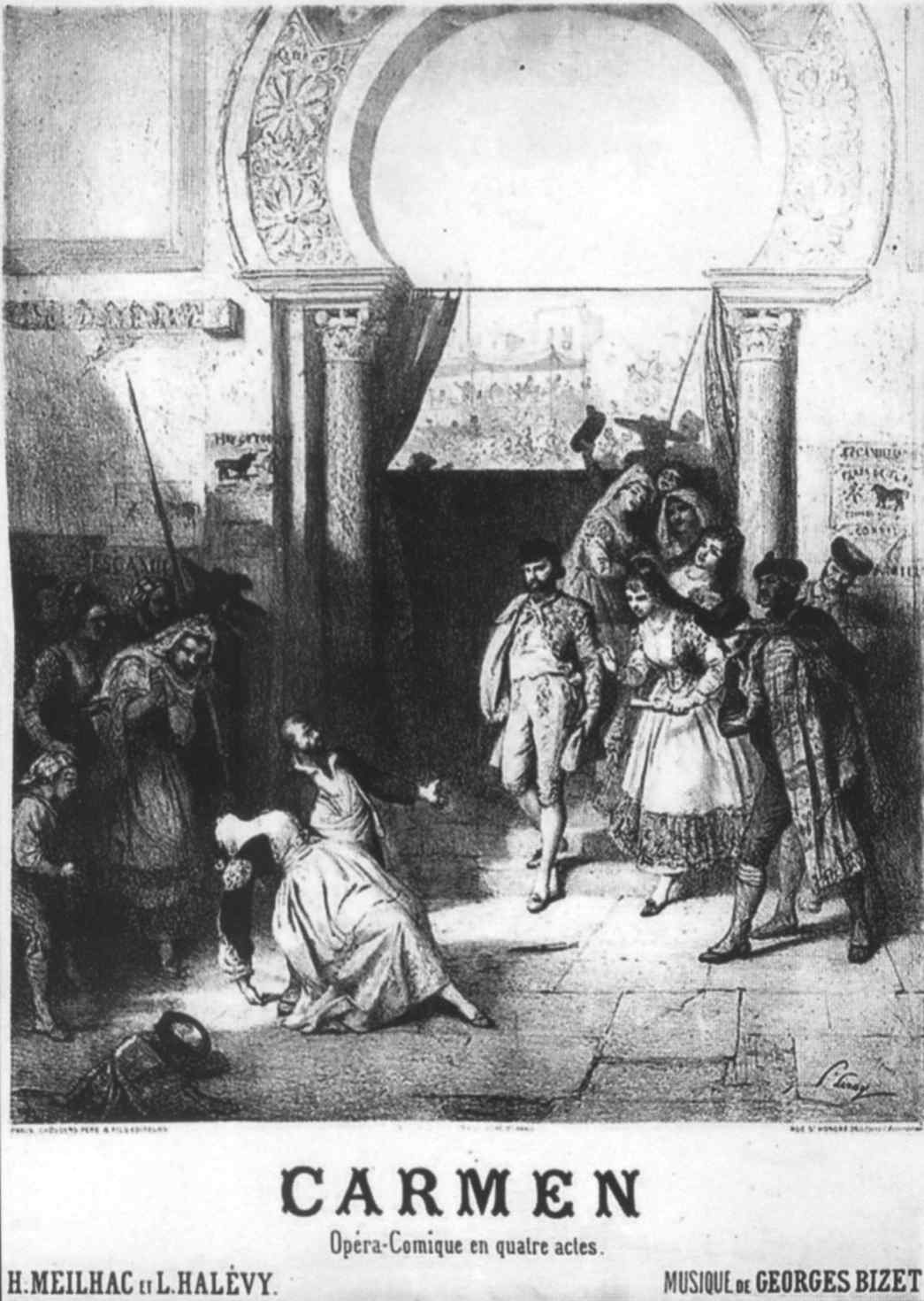
The Evolution of Carmen


Carmen Jones is a 1954 musical film produced and directed by Otto Preminger. An adaptation of the 1943 Broadway musical of the same name, Carmen Jones is a retelling of Georges Bizet's opera Carmen set during World War II with an all African-American cast. The film stars Harry Belafonte, Dorothy Dandridge, Pearl Bailey, Olga James, and Joe Adams, also featuring Brock Peters (his film debut), Roy Glenn, Nick Stewart, and Diahann Carroll (her film debut). Despite Miss Dandridge's singing career, she is not the Operatic Mezzo-Soprano the music calls for, and her voice was dubbed by the very young Marilyn Horne in her first high-profile job. Belafonte and Adams were also dubbed.

The film was a critical and commercial success, and proved to be a major star-making vehicle for Dorothy Dandridge, who portrayed the title character. Carmen Jones won the 1955 Golden Globe Award for Best Motion Picture - Musical or Comedy, and was nominated for two Academy Awards. Dandridge, nominated for the Academy Award for Best Actress, was the first African-American so honored. The film was also entered into the 1955 Cannes Film Festival.

In 1992, Carmen Jones was selected for preservation in the United States National Film Registry by the Library of Congress as being "culturally, historically, or aesthetically significant".

Carmen: A Hip Hopera is a 2001 musical film produced for television by MTV and directed by Robert Townsend. The film stars Beyoncé Knowles, Mos Def, Rah Digga, Wyclef Jean, Mekhi Phifer, Da Brat, Joy Bryant, Jermaine Dupri and Lil' Bow Wow. It is based upon Georges Bizet's opera, Carmen, set in Philadelphia and Los Angeles in modern times, and features a mostly original hip-hop/R&B score in place of Bizet's opera. The movie received mainly negative reviews. To date, it is the second major attempt at an African-American adaptation of the opera. -Wikipedia


These two movies as well as numerous other film adaptations were inspired by Carmen the French opéra comique by Georges Bizet. The libretto is by Henri Meilhac and Ludovic Halévy, based on the novella of the same title by Prosper Mérimée, first published in 1845, itself influenced by the narrative poem The Gypsies (1824) by Alexander Pushkin. The opera premiered at the Opéra-Comique of Paris on 3 March 1875, but its opening run was denounced by the majority of critics. -Wikipedia


The Evolution of Carmen


Saturday, March 28, 2009

William Wyler won the Academy Award for Best Direction Thrice | Filmography


William Wyler (July 1, 1902July 27, 1981) has the distinction of having won the Academy Award for Best Direction on three occasions. The awards were for his direction of: Ben Hur, The Best Years of Our Lives, and Mrs. Miniver. He is tied with Frank Capra and behind John Ford, who won four Oscars in this category. There are twelve other directors who have won two Academy Awards for Best Director.

Wyler's films garnered more awards for participating artists and actors than any other director in the history of Hollywood. Besides winning three times, he received twelve Oscar nominations for Best Director, while dozens of his collaborators and actors (such as Audrey Hepburn, Olivia de Havilland) won Oscars or were nominated. In 1965, Wyler won the Irving Thalberg Award for career achievement. Eleven years later, he received the American Film Institute Life Achievement Award. In addition to his Best Picture and Best Director Oscar wins, ten of Wyler's films earned Best Picture nominations.

Wyler's style is (among auteurist critics) notoriously difficult to perceive. He did not build a stable of players like Capra, Sturges or Ford. He directed varied types of films without any trademark shots or themes, but in his choice of lighting, blocking and camera distance, and in the serious liberal tone of his work, a continuity of worldview is detectable.

William Wyler filmography »

Thursday, March 26, 2009

The Great Escape | Fact vs Fiction


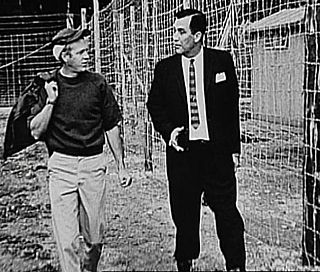
Steve McQueen with Wally Floody, a former POW who was actually part of the real Great Escape plan and acted as technical advisor on the film.


The Great Escape is a 1963 film which features an all-star cast seeking to break out of a German POW camp during World War Two. Although largely fictional, elements of the film were based on fact with events and characters condensed.

While the filmmakers made every effort to remain faithful to Paul Brickhill's account of the escape, given the scope and the length of time over which the book unfolds it was inevitable that some adjustments would have to be made to allow the story to be presented on screen. The result is that much of the action has been condensed in time and many of the men appear as composites of the real-life individuals who appear in the book.

Composite Characters Explained »

One important liberty taken by the film makers was that, in actual fact, no serving member of the American armed forces was involved in the final escape. Although not originally intended, the director John Sturges was told to write American heroes into the script or abandon the project. While fictional American characters dominated the film, it does concede that it was a mainly British led operation.

General Narrative

One important fact omitted from the film was the help the POWs received from outside the camp, some of it from their home countries; they received much material that proved invaluable for this and other escapes. Acting through secret agencies such as MI9, families from Allied nations would send maps, papers, tools as disguised material hidden in gifts, books, food, and other objects. Ex-POWs asked the film-makers to exclude such details lest it jeopardize future POW escapes.

The theft of a German airplane (in the film, a Bücker Bü 181) by Hendley and Blythe is also fictitious, although there was a failed attempt by Lorne Welch and Walter Morison to steal a plane following the delousing party escape a year earlier. Likewise the movie shows the plane going over Bavaria's Neuschwanstein Castle on the way to Switzerland; the 181 range is only about 497 miles — in real life their flight from Stalag Luft III would have gone down at least 50 miles from the Swiss border — instead of going down near the Swiss Alps.

A scene shows a choir singing to cover the noise of work done for the escape, but, in reality, it was a group of prisoners who formed a musical band and called themselves the "Sagan Serenaders". Future television meteorologist Wally Kinnan, then a First Lieutenant in the US Army Air Corps, and Pilot Officer Leonard Whiteley of the British Royal Air Force had organized the group. The Serenaders received musical instruments from aid organizations and whatever the German captors could scrounge. Musicians Tiger Ward, Nick Nagorka and pianist John Bunch were also members of this group.

Number of escapees

Only 76 of the projected 200 men escaped while an air raid occurred; only three POWs escaped Germany into neutral territory: the Norwegians Per Bergsland and Jens Müller who escaped to Sweden, and the Dutchman Bram van der Stok who reached Spain. Though Roger Bartlett in the film speaks of freeing 250 men, there is no account of a target other than 200, and in the movie itself only about 15 POWS go through the tunnel to the forest.

The tunnels

The film depicts Tom's entrance as being under a stove and Harry's as in a drain sump in a washroom. In reality, Dick's entrance was the drain sump, Harry's was under the stove, and Tom's was in a darkened corner.

British veterans mark Great Escape anniversary »

British veterans of the Second World War prison camp that featured in the film The Great Escape made an emotional return to the site of the getaway tunnel on the 65th anniversary of the breakout immortalised in the Hollywood film.

Wednesday, March 25, 2009

Hellcats of the Navy | Ronald Reagan and wife Nancy Davis revered by the Navy | State Funeral


Hellcats of the Navy (1957) is a movie starring Ronald Reagan and wife Nancy Davis (her then professional name) — a moral World War II submarine tale — the only film in which they appear together.

Reagan plays Captain Casey Abbott, commander of the fictional submarine USS Starfish, who is ordered to undertake a dangerous mission which sees him attempting to cut off the flow of supplies between China and Japan in the heavily-mined waters off the Asiatic mainland.

As a result of this film and Mr. Reagan's service as Commander in Chief, the Reagans are particularly revered by the Navy, which was especially evident during Mr. Reagan's funeral services.

Ronald Reagan's casket, on a horse-drawn caisson, being pulled down Constitution Avenue to the Capitol Building


Reagan's casket, a Marsellus Masterpiece model, was carried by a military honor guard representing all branches of the United States Armed Forces.

Events in the capital began when Reagan's casket arrived at Andrews Air Force Base, Maryland. It was removed from the plane, driven by hearse in a procession through the Maryland and Virginia suburbs and the nation's capital, across the Memorial Bridge, and onto Constitution Avenue.

Near the Ellipse, and within sight of the White House, the hearse halted and Reagan's body was transferred to a horse-drawn caisson for the procession down Constitution Avenue to Capitol Hill. Nancy Reagan stepped out of her limousine to witness the body's transfer; she was met with a warm greeting, including applause. Military units escorted the caisson as it made its way to the sounds of muffled drums. Behind the caisson was a riderless horse named Sergeant York, carrying Reagan's riding boots reversed in the stirrups. The caisson paused at 4th street and Constitution Avenue, where 21 Air Force F-15s flew over in missing man formation.

The caisson stopped when it arrived at Capitol Hill; military units removed it, and Hail to the Chief was played amidst a 21-gun salute. Two teams of military body bearers carried the coffin up the steps of the Capitol to Battle Hymn of the Republic.

When the casket reached the top of the steps, Nancy Reagan and her military escort met it. As the casket passed them, Mrs. Reagan momentarily pulled away from her escort, reached out, and touched the casket. The casket was placed under the rotunda, where it lay in state on Abraham Lincoln's catafalque. An evening memorial service then took place, with dignitaries

Tuesday, March 24, 2009

Lang's Newspaper Noir Trio | The Blue Gardenia - While the City Sleeps - Beyond a Reasonable Doubt

The Blue Gardenia is a 1953 black-and-white film noir directed by Fritz Lang. The first of Lang's "newspaper noir" movie trio -- with While the City Sleeps and Beyond a Reasonable Doubt -- The Blue Gardenia criticizes newspaper coverage of a sensational murder case. Nat King Cole sings the title song and appears in the movie. The theme song was written by Nelson Riddle. Film director and writer Peter Bogdanovich called the film "A particularly venomous picture of American life." DVD Available »

While the City Sleeps is the next newspaper film noir directed by Fritz Lang. The newspaper drama, written by Casey Robinson was based on The Bloody Spur by Charles Einstein. The film features Dana Andrews, Rhonda Fleming, George Sanders, Howard Duff, and others. The film weaves together two stories: a serial killer hunt and the competition for a newspaper's editorship.

Beyond a Reasonable Doubt was last of the trio directed by Fritz Lang. It was written by Douglas Morrow. The film, considered film noir, was the last American film directed by Lang. A newspaper publisher, wanting to prove a point about the insufficiency of circumstantial evidence, talks his possible son-in-law Tom Garrett into a hoax in an attempt to expose the alleged ineptitude of the city's hard-line district attorney. In 2008, it was announced that Peter Hyams will helm a remake of the film starring Michael Douglas, Amber Tamblyn, and Jesse Metcalfe.

Saturday, March 21, 2009

Zorro's Fighting Legion DVD

Zorro's Fighting Legion was a 1939 Republic Pictures film serial consisting of 12 chapters. It featured Reed Hadley as Zorro. The plot revolved around his alter-ego Don Diego's fight against the evil Don Del Oro. It was noted for its exciting stunts and thrilling cliffhanger chapter endings as well as a better-than-average plot.

A trademark of the serial's production is the sudden demise of at least one native informant each episode. The direction, being unsophisticated, was identical for each informant's death, and thus became a source of unintentional humor. Each informant, upon uttering the phrase, "Don del Oro is..." would be shot by a golden arrow and die with a before being able to name the villain's alter ego.

Zorro's Fighting Legion has been airing 3 episodes Saturdays at 9:00AM ET on TCM. It is popular for Saturday morning twittering. If you missed it or would like to experience again its available on DVD.

Zorro's Fighting Legion (1939) DVD »

Monday, March 16, 2009

Show Boat (1936) vs Show Boat (1951)


Show Boat (1936) is a film based on the musical by Jerome Kern (music) and Oscar Hammerstein II (script and lyrics), which the team adapted from the novel by Edna Ferber.

This film version from Universal Pictures, which had in 1929 filmed a part-talkie version of Ferber's original novel, is, for the most part, a faithful adaptation of the famed Broadway musical version of the book, and retains the interracial subplot so important to both the novel and the show.

This film version of Show Boat stars Irene Dunne and Allan Jones, with Charles Winninger, Paul Robeson, Helen Morgan, Helen Westley, Queenie Smith, Sammy White, Donald Cook, Arthur Hohl, and Hattie McDaniel. It was directed by Frankenstein / Bride of Frankenstein director James Whale, who tried to bring as many people from the stage production as he could to work on the film.

Robeson, for whom the role of Joe was actually written, had appeared in the show onstage in London in 1928 and in the Broadway revival of 1932. Dunne had been brought in to replace Norma Terris, the original Magnolia, in the touring version of the show, and had toured the U.S. in the role beginning in 1929.

According to film historian Miles Kreuger in his book Show Boat: The History of a Classic American Musical, great care was taken by director James Whale to insure a feeling of complete authenticity in the set and costume design for the 1936 film.

The 1936 version of Show Boat is considered by nearly all film critics to be one of the classic film musicals of all time, and one of the best stage-to-film adaptations ever made.

Except for the final sequence and the three additional songs written especially for the film by Kern and Hammerstein, it follows the stage musical extremely closely, unlike the 1929 film and the 1951 version released by MGM. It also retains much of the comedy in the show.

The 1936 Show Boat was successful at the box office, but was withdrawn from circulation in the 1940's, after MGM bought the rights so that they could film a Technicolor remake; however, MGM's version did not begin filming until 1950, and was released in the summer of 1951. The controversy surrounding Paul Robeson's supposed Communist leanings further assured that the 1936 film would not be seen for a long time, and it was not widely seen again until after Robeson's death in 1976.

The Kern-Hammerstein musical was remade in 1951 by MGM in Technicolor, starring Kathryn Grayson, Ava Gardner, and Howard Keel, with Joe E. Brown, Marge Champion, Gower Champion, William Warfield, Robert Sterling, Agnes Moorehead and Leif Erickson. The film was the first screen version of Show Boat not to include any of the actors who had appeared in the original 1927 stage production (if one does not count Till the Clouds Roll By as a film version of Show Boat).

It was adapted by John Lee Mahin and was directed by George Sidney. Filmed in the typical MGM lavish style, this version is the most financially successful of the film adaptations of the play, and is one of MGM's most popular musicals, though arguably one of the studio's less inventive ones. It was the first film version of "Show Boat" not to feature Robert Russell Bennett's stage orchestrations in one form or another.

Oscar Hammerstein II's dialogue was almost completely rewritten (by Mahin), the story was given a major overhaul near the end of the film and the changes are considered to make this version of the story quite distinct from other versions. Changes included keeping the characters of Magnolia and Gaylord significantly younger at the end than in the play, and the expansion of the role of Julie to give her character greater depth. Kim (Magnolia and Ravenal's daughter) appears only as a baby and a little girl in this version. Nearly all of the purely comic scenes were removed, as much of the comedy in the show has no direct bearing on the plot.

The version of "Ol' Man River" heard here is considered by film historians to be by far the best moment, both musically and pictorially, in the film. Musical theatre historian Miles Kreuger, who had many harsh words for the 1951 Show Boat in his 1977 book Show Boat: The History of a Classic American Musical nevertheless had nothing but high praise for this sequence. It was staged and directed by an uncredited Roger Edens during an illness of George Sidney, who directed the rest of the film. However, the "Ol' Man River" sequence in the 1936 film version of the show, with its tracking pan around the seated, singing figure of Paul Robeson, and its expressionistic montages of field and dock workers performing their tasks, is perhaps even more highly regarded.

The aspects of the original stage version dealing with racial inequality, especially the story line concerning miscegenation, were highly "sanitized" and deemphasized in the 1951 film MORE »

Show Boat the musical is widely considered one of the most influential works of the American musical theatre. As the first true American "musical play."

Related Posts with Thumbnails

Who is the mysterious TCManiac?

First, I'll tell you who I am not. I am not affiliated with TCM. I am not some superbot created by software developers. I am not being paid by TCM or anyone else to dedicate my time to tweeting. I am a real flesh and blood human being. I am a real maniac for TCM. I really do keep my TV tuned to TCM 24-7. I created the TCManiacs twitter as a result of my sincere passion for watching Turner Classic Movies.

How I got started?
Well, I've been a fan of TCM since its inception. As I lay flat on my back recovering from a disabling health crisis unable to do little more than watch TV and surf the internet, I found refuge watching TCM round the clock. I soon developed an obsessive habit of keeping a browser tab open for the TCM schedule and beating Robert Osbourne's introductions to finding out facts for upcoming movies. My entire day and night became defined by the TCM line-up. At the beginning of 2009 I decided to check out twitter and lucked up on some fellow TCM fans to friend. During the 31 days Oscar I decided to dedicate a twitter just to share my TCM obsession by tweeting about every movie every day of February. I was totally overwhelmed by the number of fellow TCM maniacs that became my following. Its been a WIN WIN in everyway for me. I have had the opportunity to share fun stuff with some incredible fellow classic movie lovers and bloggers. With so many followers I became committed to maintaining the twitter schedule and finding fun stuff for upcoming TCM movies.
How may followers show appreciation?
As I mentioned before, I am not employed by anyone nor being paid for my time maintaining tweets and blog. However, you may express your appreciation for my labor of love by dropping a token of your appreciation in the hat. Simply click the Donate button below. Any amount your heart moves you to give no matter how small will be graciously accepted.
What you mean to me?
Even if you decide to skip tipping the hat, please take the time to comment or send a message with your thoughts and suggestions. Send ideas on more fun stuff you would like featured. Send me links to your own classic movie websites. I just want to hear from you! Let me know what sharing my little obsession is worth to you. Every follower is priceless to me!

Total Pageviews

Web Graphic Design by designables.net. Header background image compliments of MERiCG.DEViNART.com
 
View blog top tags