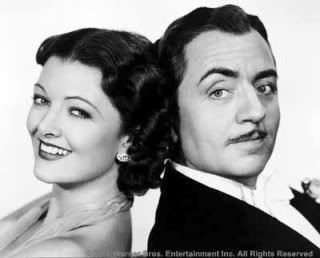
Showing posts with label adaptations. Show all posts

Sunday, August 21, 2011

Too Many Husbands & Wives Plots for Screwball Comedy


Too Many Husbands (released in the United Kingdom as My Two Husbands) is a 1940 romantic comedy film about a woman who loses her husband (Cardew) in a boating accident and remarries, only to have her first spouse reappear. The film starred Jean ArthurFred MacMurray and Melvyn Douglas. It is based on the 1919 play "Home and Beauty" by W. Somerset Maugham


My Favorite Wife (released in the U.K. as My Favourite Wifeis a film released less than two months later with a similar plot, but with the sexes reversed, with Cary Grant losing his first wife, Irene Dunne, in a boating accident and remarrying after seven years, only to find his first wife re-appear just as he's getting ready for his honeymoon night. It was produced and co-written by Leo McCarey and directed by Garson Kanin. The story is an adaptation of Alfred Lord Tennyson's poem "Enoch Arden"; in tribute, the main characters' last name is Arden. The film was nominated for three Academy Awards for Best StoryBest Score and Best Art Direction by Van Nest Polglase and Mark-Lee Kirk.


20th Century Fox began filming a 1962 remake of My Favorite Wife starring Marilyn MonroeDean Martin, and Cyd Charisse under the working title of Something's Got to Give, which was to be directed by George Cukor.
It was Monroe's last work; from the beginning its production was disrupted by her personal troubles. Marilyn Monroe was fired for seldom showing up for shooting early in its production cycle, appearing in only about 30 minutes of usable film. 

Unable to complete the movie, and having already sunk a considerable amount of money into the production and sets, 20th Century Fox went ahead with the project, under a new title, new director, and recast stars. At first, they tried to continue with Lee Remick in Monroe's place, but Martin balked at working with anyone else and that version was never completed. Monroe was re-hired but died before she could resume filming. Doris Day and James Garner were eventually cast in the roles originated by Irene Dunne and Cary Grant in My Favorite WifeChuck Connors played the Randolph Scott role, replacing Tom Tryon, who'd been cast in the Monroe version. Following Monroe's death in August 1962, the new version was released by Fox as Move Over, Darling (1963).


In a scene from Move Over, Darling, the movie that Ellen ( Doris Day ) describes to Bianca while giving her a massage is My Favorite Wife.
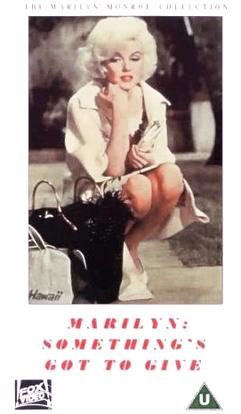

Nine hours of largely unseen footage from the film remained in the vaults at 20th Century Fox until 1999, when it was digitally restored by Prometheus Entertainment and assembled into a 37-minute segment for the two-hour documentary, Marilyn: The Final Days. It first aired on American Movie Classics on June 1, 2001, which would have been Monroe's 75th birthday. It is available on DVD.


The Tom Hanks film Cast Away has a plot similarity: the lead character is marooned on an island for several years; on his return he finds that his girlfriend has given him up for dead and has married someone else.




Saturday, July 02, 2011

View Pygmalion the inspiration for My Fair Lady FREE ONLINE

Pygmalion is a 1938 British film based on the George Bernard Shaw play of the same title, and adapted by him for the screen. It stars Leslie Howard and Wendy Hiller. The film was a financial and critical success, and won an Oscar for best screenplay and three more nominations.

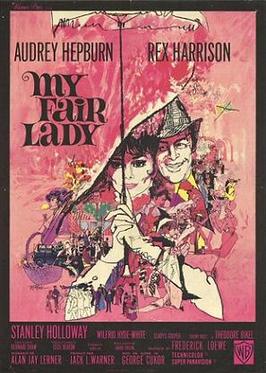
My Fair Lady is a 1964 musical film adaptation of the Lerner and Loewe stage musical, of the same name, based on the 1938 film adaptation of the original stage play Pygmalion by George Bernard Shaw. The ballroom scene and the ending were taken from the previous film adaptation (1938) (Pygmalion), rather than from the original play. The film was directed by; George Cukor and starred Audrey Hepburn and Rex Harrison.

The film won eight Academy Awards, including Best Picture,Best Actor, and Best Director.

Pygmalion available for free download at the Internet Archive

Tuesday, June 28, 2011

The Bad Seed | Local Stage Production Doesn't Disappoint This Cult Film Lover

Patty McCormick as Rhoda in 1956 film The Bad Seed

Last weekend I finally had the opportunity to see a theatrical production of The Bad Seed.  When asked by my son who escorted me  to classify the Bad Seed,  I first called it a black comedy because of the movies high camp value, but clarified it later to be a comedic thriller. The intensity of the subject of serial killing family traits passed down to our children requires some comedic relief. My first experience with this unsettling story was by means of the Mervyn LeRoy directed  1956 horror film. Hands down in my opinion it has the best “gothcha” ending ever!  The ending is so critical that the film includes this final title card:

“You have just seen a motion picture whose theme dares to be startlingly different. May we ask that you do not divulge the unusual climax of this story. Thank you.”
Up to date smiling kiddie sociapath

The film, The Bad Seed  was decades ahead of similar contemporary thrillers such as The Good Son (starring Macaulay Culkin) which also gave us a sensational  surprise ending  to a mother’s slow realization she has spawned a child psychopath.  By means of the supporting characters, the mystery writer Reginald Tasker and Christine's father, Richard Bravo, a highly respected journalist,  there was a more intelligent discussion of pediatric sociapathy. It was somewhat obvious from the claustrophobic  settings and the theatricality of the dialogue that the film had been adapted from a stage play. I would eventually learn from the classic movie blogosphere that the 1956 movie had an entirely different ending than the Maxwell Anderson’s play it was based upon.  (The play was based upon William March's 1954 novel of same name.) As you might have guessed, the constraints of the Hays Code determined the ending as well as a few significant omissions from the original script.

Lucy Turner performance as Rhoda measures up!
I might never have had the opportunity to see the stage version of this obscure cult classic, if I hadn’t made the recent move to Nashville where the small non profit Street Theatre Company was reviving the play. Although I looked forward to discovering what the film had to change from the play, I worried that this local stage production would not be able to overcome my expectations for one of my favorite villainous character of all times.

Considering the fact that the film confined most of its action to the living room, the simply constructed one room set at the Street Theatre Company which is barely more than a small warehouse with folding chairs and theatrical lighting was not too much of a stretch of the imagination.  One by one the adult characters appeared on stage in very authentic and memorable vintage costumes and hairstyles. The live performance had the advantage of using color to distinguish characters. I noted the muted olive green tones used for the passive character of the mother. On the other hand the flamboyant loquacious Ms Breedlove was usually costumed in sophisticated black and white attire which I happen to note always had a black and white diagonal printed fabric incorporated into her accessory scarf or hat. Perhaps I am over analyzing, but kudos to the costume designer if she deliberately made those design choices based on the characters. 

Lucy Turner performance as Rhoda measures up!
Finally, little Miss Perfect, Rhoda Penmark takes center stage ready to go to the school picnic in her red pinafore and red shoes with the murderous metal taps  she suggested so they don’t get worn out. Before speaking her first line I was already absolutely wowed by the young  10-year-old actress  Lucy Turner’s perfect posture and expression  which  met every expectation I had for my favorite child sociopath.  Then she nails it with Rhoda’s signature line,”What will you give me for a basket of kisses?” Throughout the play her obsessive perfectionism is revealed by her constant habit of making sure her red ribboned blonde pigtails lie perfectly on each shoulder. One of the magical elements of this stage production was the inclusion of a musical jingle to highlight each instance of this specific tidy habit. I felt totally manipulated by the variations in the speed of the few well placed notes from the creepy children’s tune Claire de la Lune which was also used in the film. I don’t know much about the original Broadway production for comparison, but the sparse simple music score provided an important layer of suspense to this production.

Linda Speir’s “unsanitized” performance of the perfectly 50s costumed Monica Breedlove was the highlight of the evening. With perfect Southern sophistication she spewed her exhaustive knowledge of Freudian theory and sexual deviancy without Hayes code restrictions. She even accuses her brother of being a closet homosexual and herself of subconscious incestuous thoughts. Miss Breedlove and Leroy provided the comic relief from the serious discussions of sociopathy being environmental versus genetic by writers, Tasker and Bravo. The heart wrenching drama was also well played by both grieving mothers, Adele Akin as Mrs. Daigle, mother of the drowned boy and Lisa Marie Wright as Mrs. Pembroke, mother of the suspected murderer.

All in all, the stage version paralleled the film sans the sex talk right up until the ending. I am no theatrical critic, just a classic movie lover that happens to rate The Bad Seed amongst her favorite campy horror flicks. The Street Theatre Company pulled off a great production that kept me on the edge of my seat through the wonderful performances of a great cast accompanied by spine tingling sound and music. Not only was I not disappointed I found this play just as "thrilling" and "shocking" as the film. Very impressed!

WARNING SPOILERS:

Although I have heard many criticize the movie ending which could not allow a murderer to survive unpunished due to Hayes Code, I personally felt more satisfaction from the movie ending. The two versions remain the same until after Mrs. Penmark attempts to permanently put her daughter to sleep and take her own life by gunshot. BTW I almost wet my pants with the gunshot in dark at the play. Anyway, in the film the next scene becomes a hospital waiting room instead of the living room after the funeral for the play. The dialogue for both scenes remains almost identical and both scenes end with the revelation that Rhoda survived the sleeping pill overdose. That is the end of the surprise ending in the stage version. The Mother has just been buried but the murderous child lives on. Now that’s horror. But in the film adaptation, I really liked the fact that the kiddy psychopath was so obsessed with getting that medal that she sneaks out during a terrible storm after methodically getting dressed in (what I imagined despite black and white film) her perfect yellow rain coat, galoshes and umbrella to go out to the pier and get justice…a lightning strike from the almighty. Perhaps it’s not as horrific an ending, and perhaps it’s awful to admit but it’s a LMAO moment for me every time!

Thursday, July 29, 2010

The Kennel Murder Case | Free Online Movie

The Kennel Murder Case is a 1933 murder mystery novel written by S. S. Van Dine with fictional detective Philo Vance investigating a complex locked room mystery.
A Warner Bros. film version of The Kennel Murder Case appeared in 1933. The film was directed by Michael Curtiz and starred William Powell as Philo Vance, reprising the role after appearing as Vance in three films for Paramount, and Mary Astor as Hilda Lake, the victims' niece. Many film historians (including William K. Everson, who pronounced it a "masterpiece" in the August 1984 issue of Films in Review) consider it one of the greatest screen adaptations of a Golden Age mystery novel, and rank it with the 1946 film Green for Danger.

The Kennel Murder Case was remade by Warner in 1940 as Calling Philo Vance with James Stephenson as Vance and William Clemens directing. World War II-era espionage stood in for the skulduggery of the art world in the remake.

The novel The Kennel Murder Case can be read here, courtesy of Project Gutenberg. Enjoy the film The Kennel Murder Case here or download for free at the Internet Archive.

Enhanced by Zemanta

Saturday, July 10, 2010

D.W. Griffith's Abraham Lincoln (1930) | Free Online

Abraham Lincoln (film)Image via Wikipedia
Abraham Lincoln, also released under the title D. W. Griffith's 'Abraham Lincoln', is a (1930) is a biographical film about American president Abraham Lincoln directed by D. W. Griffith. It stars Walter Huston as Lincoln and Una Merkel, in her first talking role, as Ann Rutledge. The script was co-written by Stephen Vincent Benét, author of the Civil War prose poem John Brown's Body. This was the first of only two sound films made by Griffith. The film was not a hit at the time, but in recent years it has come to be regarded as one of the definitive films on Lincoln.
Enhanced by Zemanta

Thursday, December 31, 2009

Nick & Nora The Musical

Nick and Nora Charles, or Mr. and Mrs. Nicholas Charles (which was changed from his father's original Greek name "Charalambides"), are fictional characters created by Dashiell Hammett in his novel The Thin Man. Nick is a retired private detective and Nora a wealthy society woman whose snobbish family thinks she has married beneath herself; Hammett modeled her on his lover Lillian Hellman. Their banter provides comic relief of the type that would later be seen between John Steed and Emma Peel in The Avengers. The couple have a pet dog, Asta, who is a female schnauzer (but became a male wire fox terrier when the book was made into a film)

The film adaptation of The Thin Man was a resounding success, and although Hammett never wrote another novel with Nick and Nora Charles, five movie sequels were produced.

In 1991, the Thin Man motion pictures were adapted into an unsuccessful Broadway musical, Nick & Nora with a book by Arthur Laurents, lyrics by Richard Maltby, Jr., and music by Charles Strouse. It opened on December 8, 1991 and ran for just nine performances before closing on December 15. In his memoir Original Story By, Laurents confessed he didn't realize until the show was in previews that the characters of Nick and Nora Charles were identified so closely with William Powell and Myrna Loy that the public would have difficulty accepting anyone else in the roles.

Thursday, November 19, 2009

The Postman Always Rings Twice | Title's Meaning

The Postman Always Rings Twice is a 1946 drama-film noir based on the 1934 The Postman Always Rings Twice novel by James M. Cain. This adaptation of the novel is the best known, featuring Lana Turner and John Garfield.

The title is something of a non sequitur in that nowhere in the novel does a postman character appear, nor is one even alluded to. As such, its meaning has often been the subject of speculation by writers such as William Marling, who suggested that Cain may have taken the title from the sensational 1927 case of Ruth Snyder. Snyder was a woman who, like Cora in The Postman Always Rings Twice, had conspired with her lover to murder her husband. In that case, Snyder said she'd prevented her husband from discovering the changes she'd made to his life insurance policy by telling the postman to deliver the policy's payment notices only to her, and instructing him to ring the doorbell twice as a signal indicating he had such a delivery for her.

In fact, however, Cain gave a specific explanation of the title's origin in the preface to his subsequent novel Double Indemnity. There, he wrote that the genesis of the title for The Postman Always Rings Twice came from a discussion he'd had with screenwriter Vincent Lawrence. According to Cain, Lawrence spoke of the anxiety he felt when waiting for the postman to bring him news on a submitted manuscript. According to Cain, Lawrence noted that he would know when the postman had finally arrived because the postman always rang twice, and Cain then lit upon that phrase as a title for his novel. Upon discussing it further, the two men agreed such a phrase was metaphorically suited to Frank's situation at the end of the novel.

With the "postman" being God, or Fate, the "delivery" meant for Frank was his own death as just retribution for murdering Nick. Frank had missed the first "ring" when he initially got away with that killing. However, the postman rang again, and this time the ring was heard, when Frank was wrongly convicted of having murdered Cora, and then sentenced to die for the crime. The theme of an inescapable fate is further underscored in the novel by The Greek's escape from death in the lovers' first murder attempt, only to be done in by their second one.

In his biography of Cain, author Roy Hoopes also recounted the conversation between Cain and Lawrence that gave birth the novel's title. Hoopes's account of their conversation is similar to Cain's, but offered extended detail regarding Lawrence's comments. Specifically, in Hoopes's telling, Lawrence did not say simply that the postman always rang twice, but rather said that at times he was so anxious awaiting the postman's delivery that he'd intentionally go into his backyard trying to avoid hearing the postman's ring. However, Lawrence continued, this tactic inevitably failed because even if the postman's first ring was not noticed, he would always ring twice, and that second ring would inevitably be heard.

In the 1946 film adaptation of the novel, Frank explicitly explains the title in the terms offered by Hoopes's biography of Cain.

Friday, August 07, 2009

3:10 to Yuma has Successful 2007 Remake


3:10 to Yuma is a 1957 western film starring Glenn Ford and Van Heflin and directed by Delmer Daves. The title song, "The 3:10 to Yuma", was sung by Frankie Laine. The film was based on the short story by Elmore Leonard. The film was well received on release and is still highly regarded today.

When first released in the summer of 1957, the film became popular among audiences and critics alike for its suspenseful nature and sharp black-and-white cinematography. Ford received particular notice for his against-type villainous performance. The following year, 3:10 to Yuma was nominated for the British Academy of Film and Television Arts award for Best Film.

Since its release, the film has become a staple of cable television and has gained an audience of several generations. A critically successful remake was released in 2007.

3:10 to Yuma , the 2007 remake is directed by James Mangold and produced by Cathy Konrad, director and producer of Walk the Line, and stars Russell Crowe and Christian Bale. Filming took place in various locations in New Mexico. 3:10 to Yuma opened September 7, 2007, in the United States.

The film received two Academy Award nominations for the 80th Academy Awards. Marco Beltrami was nominated for Best Original Score, and Paul Massey, David Giammarco, and Jim Steube were nominated for Best Sound Mixing.


Related Posts with Thumbnails

Who is the mysterious TCManiac?

First, I'll tell you who I am not. I am not affiliated with TCM. I am not some superbot created by software developers. I am not being paid by TCM or anyone else to dedicate my time to tweeting. I am a real flesh and blood human being. I am a real maniac for TCM. I really do keep my TV tuned to TCM 24-7. I created the TCManiacs twitter as a result of my sincere passion for watching Turner Classic Movies.

How I got started?
Well, I've been a fan of TCM since its inception. As I lay flat on my back recovering from a disabling health crisis unable to do little more than watch TV and surf the internet, I found refuge watching TCM round the clock. I soon developed an obsessive habit of keeping a browser tab open for the TCM schedule and beating Robert Osbourne's introductions to finding out facts for upcoming movies. My entire day and night became defined by the TCM line-up. At the beginning of 2009 I decided to check out twitter and lucked up on some fellow TCM fans to friend. During the 31 days Oscar I decided to dedicate a twitter just to share my TCM obsession by tweeting about every movie every day of February. I was totally overwhelmed by the number of fellow TCM maniacs that became my following. Its been a WIN WIN in everyway for me. I have had the opportunity to share fun stuff with some incredible fellow classic movie lovers and bloggers. With so many followers I became committed to maintaining the twitter schedule and finding fun stuff for upcoming TCM movies.
How may followers show appreciation?
As I mentioned before, I am not employed by anyone nor being paid for my time maintaining tweets and blog. However, you may express your appreciation for my labor of love by dropping a token of your appreciation in the hat. Simply click the Donate button below. Any amount your heart moves you to give no matter how small will be graciously accepted.
What you mean to me?
Even if you decide to skip tipping the hat, please take the time to comment or send a message with your thoughts and suggestions. Send ideas on more fun stuff you would like featured. Send me links to your own classic movie websites. I just want to hear from you! Let me know what sharing my little obsession is worth to you. Every follower is priceless to me!

Total Pageviews

Web Graphic Design by designables.net. Header background image compliments of MERiCG.DEViNART.com
 
View blog top tags