Tuesday, June 28, 2011

The Bad Seed | Local Stage Production Doesn't Disappoint This Cult Film Lover

Patty McCormick as Rhoda in 1956 film The Bad Seed

Last weekend I finally had the opportunity to see a theatrical production of The Bad Seed.  When asked by my son who escorted me  to classify the Bad Seed,  I first called it a black comedy because of the movies high camp value, but clarified it later to be a comedic thriller. The intensity of the subject of serial killing family traits passed down to our children requires some comedic relief. My first experience with this unsettling story was by means of the Mervyn LeRoy directed  1956 horror film. Hands down in my opinion it has the best “gothcha” ending ever!  The ending is so critical that the film includes this final title card:

“You have just seen a motion picture whose theme dares to be startlingly different. May we ask that you do not divulge the unusual climax of this story. Thank you.”
Up to date smiling kiddie sociapath

The film, The Bad Seed  was decades ahead of similar contemporary thrillers such as The Good Son (starring Macaulay Culkin) which also gave us a sensational  surprise ending  to a mother’s slow realization she has spawned a child psychopath.  By means of the supporting characters, the mystery writer Reginald Tasker and Christine's father, Richard Bravo, a highly respected journalist,  there was a more intelligent discussion of pediatric sociapathy. It was somewhat obvious from the claustrophobic  settings and the theatricality of the dialogue that the film had been adapted from a stage play. I would eventually learn from the classic movie blogosphere that the 1956 movie had an entirely different ending than the Maxwell Anderson’s play it was based upon.  (The play was based upon William March's 1954 novel of same name.) As you might have guessed, the constraints of the Hays Code determined the ending as well as a few significant omissions from the original script.

Lucy Turner performance as Rhoda measures up!
I might never have had the opportunity to see the stage version of this obscure cult classic, if I hadn’t made the recent move to Nashville where the small non profit Street Theatre Company was reviving the play. Although I looked forward to discovering what the film had to change from the play, I worried that this local stage production would not be able to overcome my expectations for one of my favorite villainous character of all times.

Considering the fact that the film confined most of its action to the living room, the simply constructed one room set at the Street Theatre Company which is barely more than a small warehouse with folding chairs and theatrical lighting was not too much of a stretch of the imagination.  One by one the adult characters appeared on stage in very authentic and memorable vintage costumes and hairstyles. The live performance had the advantage of using color to distinguish characters. I noted the muted olive green tones used for the passive character of the mother. On the other hand the flamboyant loquacious Ms Breedlove was usually costumed in sophisticated black and white attire which I happen to note always had a black and white diagonal printed fabric incorporated into her accessory scarf or hat. Perhaps I am over analyzing, but kudos to the costume designer if she deliberately made those design choices based on the characters. 

Lucy Turner performance as Rhoda measures up!
Finally, little Miss Perfect, Rhoda Penmark takes center stage ready to go to the school picnic in her red pinafore and red shoes with the murderous metal taps  she suggested so they don’t get worn out. Before speaking her first line I was already absolutely wowed by the young  10-year-old actress  Lucy Turner’s perfect posture and expression  which  met every expectation I had for my favorite child sociopath.  Then she nails it with Rhoda’s signature line,”What will you give me for a basket of kisses?” Throughout the play her obsessive perfectionism is revealed by her constant habit of making sure her red ribboned blonde pigtails lie perfectly on each shoulder. One of the magical elements of this stage production was the inclusion of a musical jingle to highlight each instance of this specific tidy habit. I felt totally manipulated by the variations in the speed of the few well placed notes from the creepy children’s tune Claire de la Lune which was also used in the film. I don’t know much about the original Broadway production for comparison, but the sparse simple music score provided an important layer of suspense to this production.

Linda Speir’s “unsanitized” performance of the perfectly 50s costumed Monica Breedlove was the highlight of the evening. With perfect Southern sophistication she spewed her exhaustive knowledge of Freudian theory and sexual deviancy without Hayes code restrictions. She even accuses her brother of being a closet homosexual and herself of subconscious incestuous thoughts. Miss Breedlove and Leroy provided the comic relief from the serious discussions of sociopathy being environmental versus genetic by writers, Tasker and Bravo. The heart wrenching drama was also well played by both grieving mothers, Adele Akin as Mrs. Daigle, mother of the drowned boy and Lisa Marie Wright as Mrs. Pembroke, mother of the suspected murderer.

All in all, the stage version paralleled the film sans the sex talk right up until the ending. I am no theatrical critic, just a classic movie lover that happens to rate The Bad Seed amongst her favorite campy horror flicks. The Street Theatre Company pulled off a great production that kept me on the edge of my seat through the wonderful performances of a great cast accompanied by spine tingling sound and music. Not only was I not disappointed I found this play just as "thrilling" and "shocking" as the film. Very impressed!

WARNING SPOILERS:

Although I have heard many criticize the movie ending which could not allow a murderer to survive unpunished due to Hayes Code, I personally felt more satisfaction from the movie ending. The two versions remain the same until after Mrs. Penmark attempts to permanently put her daughter to sleep and take her own life by gunshot. BTW I almost wet my pants with the gunshot in dark at the play. Anyway, in the film the next scene becomes a hospital waiting room instead of the living room after the funeral for the play. The dialogue for both scenes remains almost identical and both scenes end with the revelation that Rhoda survived the sleeping pill overdose. That is the end of the surprise ending in the stage version. The Mother has just been buried but the murderous child lives on. Now that’s horror. But in the film adaptation, I really liked the fact that the kiddy psychopath was so obsessed with getting that medal that she sneaks out during a terrible storm after methodically getting dressed in (what I imagined despite black and white film) her perfect yellow rain coat, galoshes and umbrella to go out to the pier and get justice…a lightning strike from the almighty. Perhaps it’s not as horrific an ending, and perhaps it’s awful to admit but it’s a LMAO moment for me every time!

Thursday, April 28, 2011

The Snows of Kilimanjaro | Watch Online Free

The Snows of Kilimanjaro (film)Image via Wikipedia
The Snows of Kilimanjaro is a 1952 film based on the short story of the same name by Ernest Hemingway. The film version of the short story was directed by Henry King, and starred Gregory Peck, Ava Gardner, and Susan HaywardConsidered by Hemingway to be one of his finest stories, "The Snows of Kilimanjaro" was first published in Esquire magazine in 1936 and then republished in The Fifth Column and the First Forty-nine Stories (1938). The film was nominated for two Academy Awards; for Best Cinematography and Best Art Direction.
The Snows of Kilimanjaro available for free download at the Internet Archive or watch here!

Monday, April 11, 2011

D. W. Griffith's The Birth Of A Nation (1915)

A color poster of the movie The Birth of a NationImage via WikipediaThe Birth of a Nation (originally called The Clansman) is a 1915 American silent film co-written (with Frank E. Woods), co-produced (with Harry Aitken), and directed by D. W. Griffith and based on the novel and play The Clansman, both by Thomas Dixon, Jr. It was originally released on February 8, 1915. The film was originally presented in two parts, separated by an intermission.

The film chronicles the relationship of two families in Civil War and Reconstruction-era America: the pro-Union northern Stonemans and the pro-Confederacy southern Camerons over the course of several years. The assassination of President Abraham Lincoln by John Wilkes Booth is dramatized.

According to Variety, The Birth of a Nation, which was filmed on a budget of an estimated $110,000, is the highest-grossing film of the silent film era, with earnings of approximately $10 million and has been praised for its technical innovations.

However, the film was, and remains, highly controversial due to its portrayal of African American men (played by white actors in blackface) as unintelligent and sexually aggressive towards white women, and the portrayal of the Ku Klux Klan (whose original founding is dramatized) as a heroic force. There were widespread protests against The Birth of a Nation, and it was banned in several cities. The outcry of racism was so great that D.W. Griffith was inspired to produce Intolerance the following year.
 According to FilmSite.org:


Its pioneering technical work, often the work of Griffith's under-rated cameraman Billy Bitzer, includes many techniques that are now standard features of films, but first used in this film. Griffith brought all of his experience and techniques to this film from his earliest short films at Biograph, including the following:
  • the use of ornate title cards
  • special use of subtitles graphically verbalizing imagery
  • its own original musical score written for an orchestra
  • the introduction of night photography (using magnesium flares)
  • the use of outdoor natural landscapes as backgrounds
  • the definitive usage of the still-shot
  • elaborate costuming to achieve historical authenticity and accuracy
  • many scenes innovatively filmed from many different and multiple angles
  • the technique of the camera "iris" effect (expanding or contracting circular masks to either reveal and open up a scene, or close down and conceal a part of an image)
  • the use of parallel action and editing in a sequence (Gus' attempted rape of Flora, and the KKK rescues of Elsie from Lynch and of Ben's sister Margaret)
  • extensive use of color tinting for dramatic or psychological effect in sequences
  • moving, traveling or "panning" camera tracking shots
  • the effective use of total-screen close-ups to reveal intimate expressions
  • beautifully crafted, intimate family exchanges
  • the use of vignettes seen in "balloons" or "iris-shots" in one portion of a darkened screen
  • the use of fade-outs and cameo-profiles (a medium closeup in front of a blurry background)
  • the use of lap dissolves to blend or switch from one image to another
  • high-angle shots and the abundant use of panoramic long shots
  • the dramatization of history in a moving story - an example of an early spectacle or epic film with historical costuming and many historical references (e.g., Mathew Brady's Civil War photographs)
  • impressive, splendidly-staged battle scenes with hundreds of extras (made to appear as thousands)
  • extensive cross-cutting between two scenes to create a montage-effect and generate excitement and suspense (e.g., the scene of the gathering of the Klan)
  • expert story-telling, with the cumulative building of the film to a dramatic climax
The film looks remarkably genuine and authentic, almost of documentary quality (like Brady's Civil War photographs), vividly reconstructing a momentous time period in history - and it was made only 50 years after the end of the Civil War.

Sunday, April 10, 2011

In Memorium | Elizabeth Taylor February 27, 1932 – March 23, 2011

Cropped screenshot of Elizabeth Taylor from th...
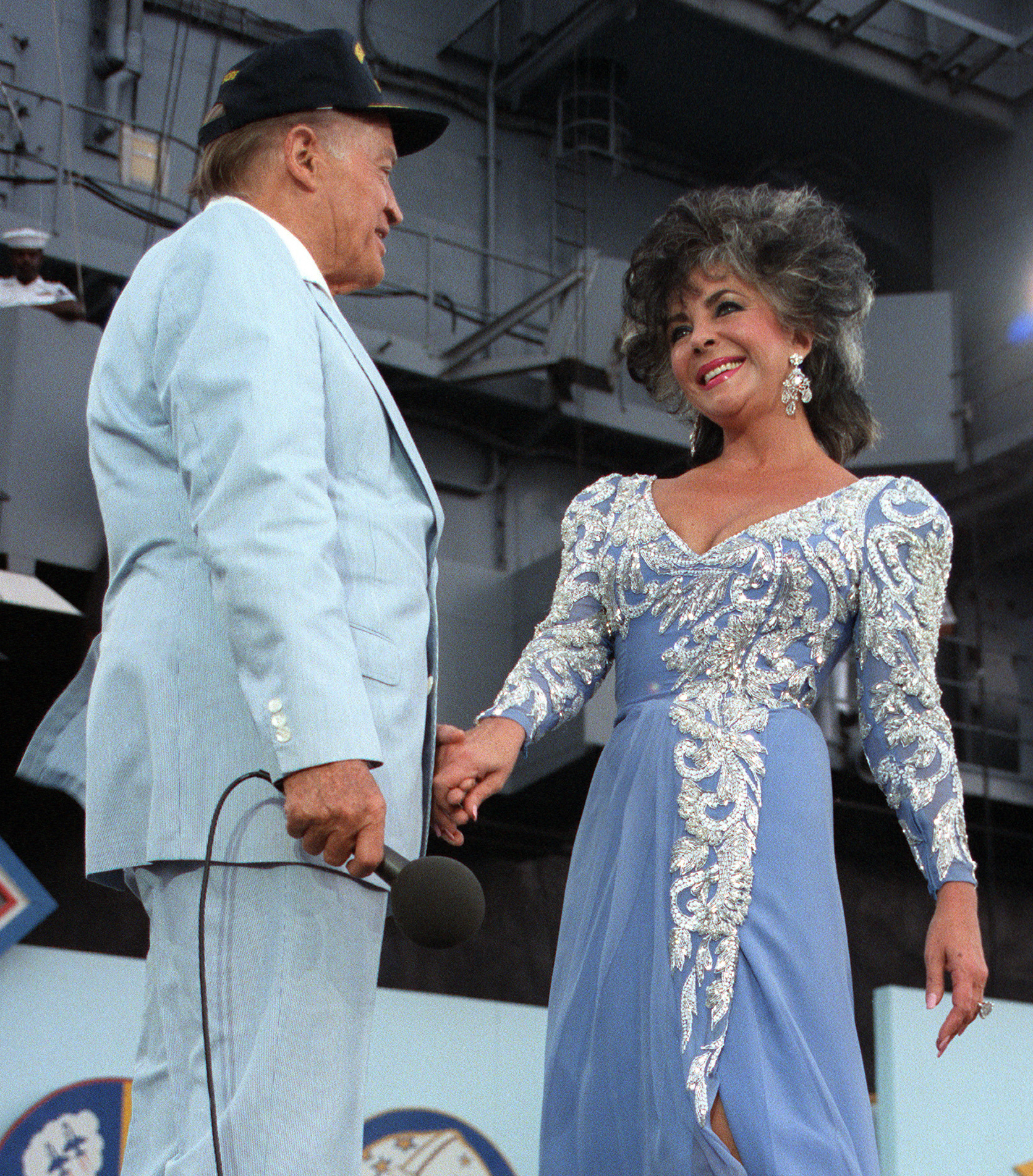
Though its impossible to appropriately eulogize Elizabeth Taylor in a blog post, I will take the time just to express my sincere love for my favorite movie star. From as early as I can remember she was the my ideal woman. I rated her beauty, talent and personality above every other actress in black-in-white or technicolor, as a child star up til her the last days of her golden years. Not to mention my admiration for her life long AIDS philanthropy and respect for her preserverance through life long health problems and chronic pain. Perhaps because she and I shared the same zodiac sign, the same birthday in February,and same favorite color of purple that I always felt a special connection for this sensitive fellow Piscean. She was the only actress that I practiced idolatry for.

Screenshot of Elizabeth Taylor from the traile...
Image via Wikipedia

Cropped screenshot of Elizabeth Taylor from th...
Image via Wikipedi
Cropped screenshot of Elizabeth Taylor from th...Image via Wikipedia
Elizabeth Taylor's Cleopatra was my favorite fantasy movie role
As I grew into womanhood I tried to capture some of her Cleopatran regality by dyeing my hair blue black. During my career as a make up artist, I plastered my lids with color, defined my eyes with black kohl liner, arched and penciled my naturally thick black brows to match hers.
During the eighties I added her frosty streaks, duplicated her layered haircut and teased my lacquered tresses into Elizabethan spikes. I imitated her bejeweled flashy fashion. I perfumed with her "Passion" fragrance. She also became my role model for business as her "White Diamonds" was always the top selling fragrance during my career in department store cosmetics. At her death Taylor left an estate estimated at $600 million to $1 billion; beyond the $150 million in jewelry, she owned $130 million in real estate. Taylor was a pioneer in marketing a celebrity merchandise brand, and despite her years as an actress, most of Taylor's wealth came from her business ventures.
Elizabeth Taylor at an...Image via WikipediaAs my age caught up with hers and I developed my own chronic pain conditions, I came to respect her life long struggle with health problems. Like everyone else she had imperfections. She made mistakes. She sinned. What makes her admirable is how she well she lived despite her pain, tragedy, problems and mistakes. She didn't let the negatives stop her. She kept on working, and giving and living life to the fullest. Right til the very end! Like Elizabeth, I hope I my epitaph will be a life well lived and well loved.

Friday, January 14, 2011

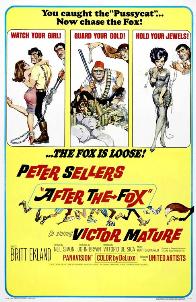
Mike Myers Austin Powers scene taken from Peter Sellers After the Fox

After the Fox  is a 1966 Italian comedy film starring Peter Sellers and directed by Vittorio De Sica. Sellers plays Aldo Vanucci, also known as The Fox, a master criminal with a talent for disguise who accepts the contract for smuggling the gold with Okra (Akim Tamiroff) the mastermind of the heist, Two policemen are constantly on his trail and Aldo has to use many disguises and tricks to throw them off his trail. The scene in the film where Aldo speaks to Okra through his voluptuous accomplice Maria Grazia Buccella inspired a similar scene in Austin Powers in Goldmember (2002), in which star Mike Myers as Austin Powers talks to Foxxy Cleopatra through the Nathan Lane character.

Peter Sellers The Bobo - The Blue Matador inspires Big Fat Liar

The BoboImage via Wikipedia
The Bobo is a 1967 British comedy film starring Peter Sellers and co-starring his then-wife Britt Ekland. Based on a 1959 novel "Olimpia" by Burt Cole, aka Thomas Dixon, Sellers is featured as the would-be Spanish singing matador, Juan Bautista.
A theater manager offers to give him a big break if he seduces the beautiful Olympia (Ekland) and spends an hour in her apartment with the lights off. In the end Sellers becomes known as the "Blue Matador" after the woman has him dyed blue in act of revenge.

A similar famous scene takes place Big Fat Liar, a 2002 American teen comedy film directed by Shawn Levy, starring Frankie Muniz, Paul Giamatti, and Amanda Bynes. Teenagers, Muniz and Bynes add blue and orange dye to Giamatti's swimming pool and shampoo, giving him blue skin and orange hair.

Related Posts with Thumbnails

Who is the mysterious TCManiac?

First, I'll tell you who I am not. I am not affiliated with TCM. I am not some superbot created by software developers. I am not being paid by TCM or anyone else to dedicate my time to tweeting. I am a real flesh and blood human being. I am a real maniac for TCM. I really do keep my TV tuned to TCM 24-7. I created the TCManiacs twitter as a result of my sincere passion for watching Turner Classic Movies.

How I got started?
Well, I've been a fan of TCM since its inception. As I lay flat on my back recovering from a disabling health crisis unable to do little more than watch TV and surf the internet, I found refuge watching TCM round the clock. I soon developed an obsessive habit of keeping a browser tab open for the TCM schedule and beating Robert Osbourne's introductions to finding out facts for upcoming movies. My entire day and night became defined by the TCM line-up. At the beginning of 2009 I decided to check out twitter and lucked up on some fellow TCM fans to friend. During the 31 days Oscar I decided to dedicate a twitter just to share my TCM obsession by tweeting about every movie every day of February. I was totally overwhelmed by the number of fellow TCM maniacs that became my following. Its been a WIN WIN in everyway for me. I have had the opportunity to share fun stuff with some incredible fellow classic movie lovers and bloggers. With so many followers I became committed to maintaining the twitter schedule and finding fun stuff for upcoming TCM movies.
How may followers show appreciation?
As I mentioned before, I am not employed by anyone nor being paid for my time maintaining tweets and blog. However, you may express your appreciation for my labor of love by dropping a token of your appreciation in the hat. Simply click the Donate button below. Any amount your heart moves you to give no matter how small will be graciously accepted.
What you mean to me?
Even if you decide to skip tipping the hat, please take the time to comment or send a message with your thoughts and suggestions. Send ideas on more fun stuff you would like featured. Send me links to your own classic movie websites. I just want to hear from you! Let me know what sharing my little obsession is worth to you. Every follower is priceless to me!

Total Pageviews

Web Graphic Design by designables.net. Header background image compliments of MERiCG.DEViNART.com
 
View blog top tags